
Mexican Tamales with Pork (Family Recipe)
Mexican tamales represent a cherished tradition of love and community for my family. There is no quick substitute for the multi-step process, from preparing the fresh pork and grinding the spices to mixing the creamy masa infused with red peppers. We’re finally sharing our treasured family recipe with others, in the hope that this culinary art form will not be lost for future generations.

This post may contain affiliate links, and I will be compensated if you make a purchase after clicking on my links. For more information, please see our privacy policy.
Mexican Tamales – A Family Tradition
This tamales recipe is like a food quilt, stitched together from generation to generation with secret ingredients and rituals added over the years.
Making tamales is a family tradition that typically involves multiple people in the kitchen, working in an assembly line filled with stories, laughter, and messy hands.

Every year, my octogenarian mother says it’s her “last time” to make tamales. And every year, she gets a hankering to make them again. They’re that good and worth the effort.
While making tamales takes time, there’s something magical about this Mexican dish that makes it a staple around the holidays and on special occasions.
Why I Love This Recipe
You’ll find the full recipe at the end of this post, but I highly recommend you view the tips and photos below before you get started.
How to Make Tamales
Tamales consist of a corn-based dough called masa filled with pork, beef, chicken, cheese, or beans. Each tamale is wrapped in a corn husk (or banana leaf) called an hoja, made pliable after soaking in hot water.
While some regions of Latin America enjoy sweet fillings for tamales, we prefer savory tamales in our Tex-Mex tradition.
This recipe calls for Boston pork butt (puerco), but we also make tamales filled with refried beans using the same spices.
Ingredients

To make pork tamales, you’ll need the following ingredients. Some of the ingredients used for the pork filling are reserved to make the masa later.
- Dried corn husks
- Pork filling
- Boston butt pork roast, cut into large chunks
- Salt, to taste
- Dried ancho chiles or New Mexico chiles
- Cumin seed (comino)
- Garlic, peeled
- Whole black peppercorns
- Lard or oil, for sautéing
- Masa
- Masa harina (Maseca for Tamales)
- Salt
- Lard (melted)
- Rendered beef fat, or tallow (optional)
- Pork broth and blended chiles (reserved from the filling)
4-Steps to Cooking Tamales
Cooking tamales from scratch involves a four-step process that may seem daunting at first, but you can divide some of the steps across a few days.
1. Cooking the pork filling
The meat filling consists of Boston pork butt, ancho chile peppers, cumin (comino) seed, garlic, and peppercorns. You’ll start by boiling chunks of pork before adding the de-seeded peppers to soften.

We prefer ancho chile peppers or New Mexico peppers to flavor both the meat and the masa. (New Mexico peppers may require a longer cooking time to soften.) The peppers add both flavor and color to the recipe.
After cooking, the pork and chiles are removed from the pot, but the broth is reserved to flavor the masa later. The next step involves chopping the pork before adding spices and garlic to create the seasoned mixture we refer to as “picadillo.”

For the best flavor, we grind the cumin seeds and peppercorns with a traditional molcajete (mortar and pestle), but you can substitute ground spices instead.

Importantly, the reserved pork broth is used to help blend the spices into the chopped meat (picadillo) and to add moisture to the masa in the next step.

2. Preparing the hojas and masa
The day before making tamales, you’ll want to soak the corn husks (hojas) in hot water and let them sit overnight. The next morning, rinse the hojas and soak them again in fresh hot water.

Masa is a ground corn flour that forms the outer shell of the tamale. To create a flavorful masa dough, you’ll add liquified lard and beef tallow (preferably) as well as the chile purée and pork broth resulting from the first step of the process.
Your masa should feel smooth and spreadable after adding the fat and pork, while the chiles will give it a more reddish color.
3. Assembling the tamales
Assembling the tamales is the best part of the process, since it typically involves multiple family members helping to prepare the hojas and fill the tamales with meat.

Opening the hoja 
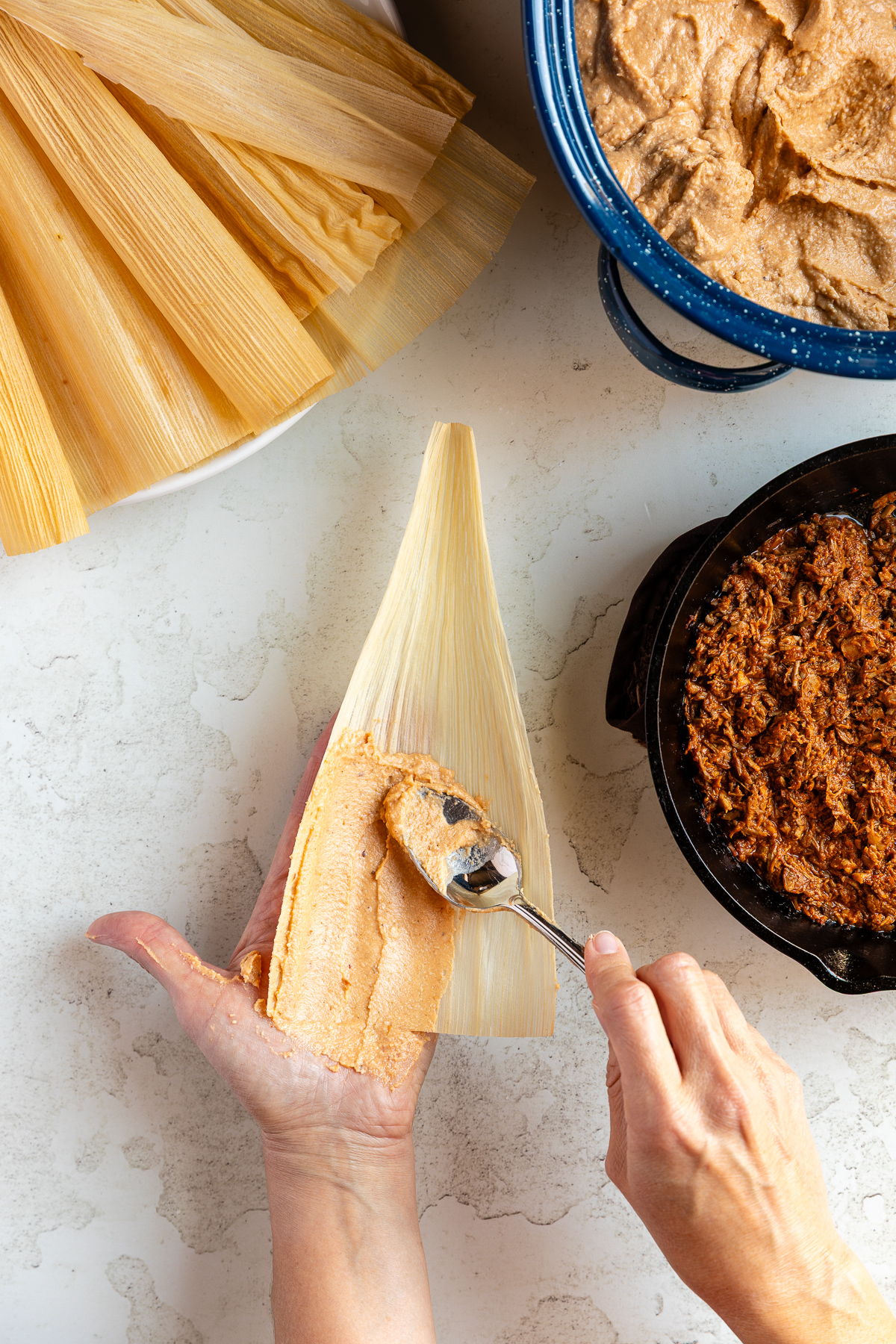
Spreading the masa 
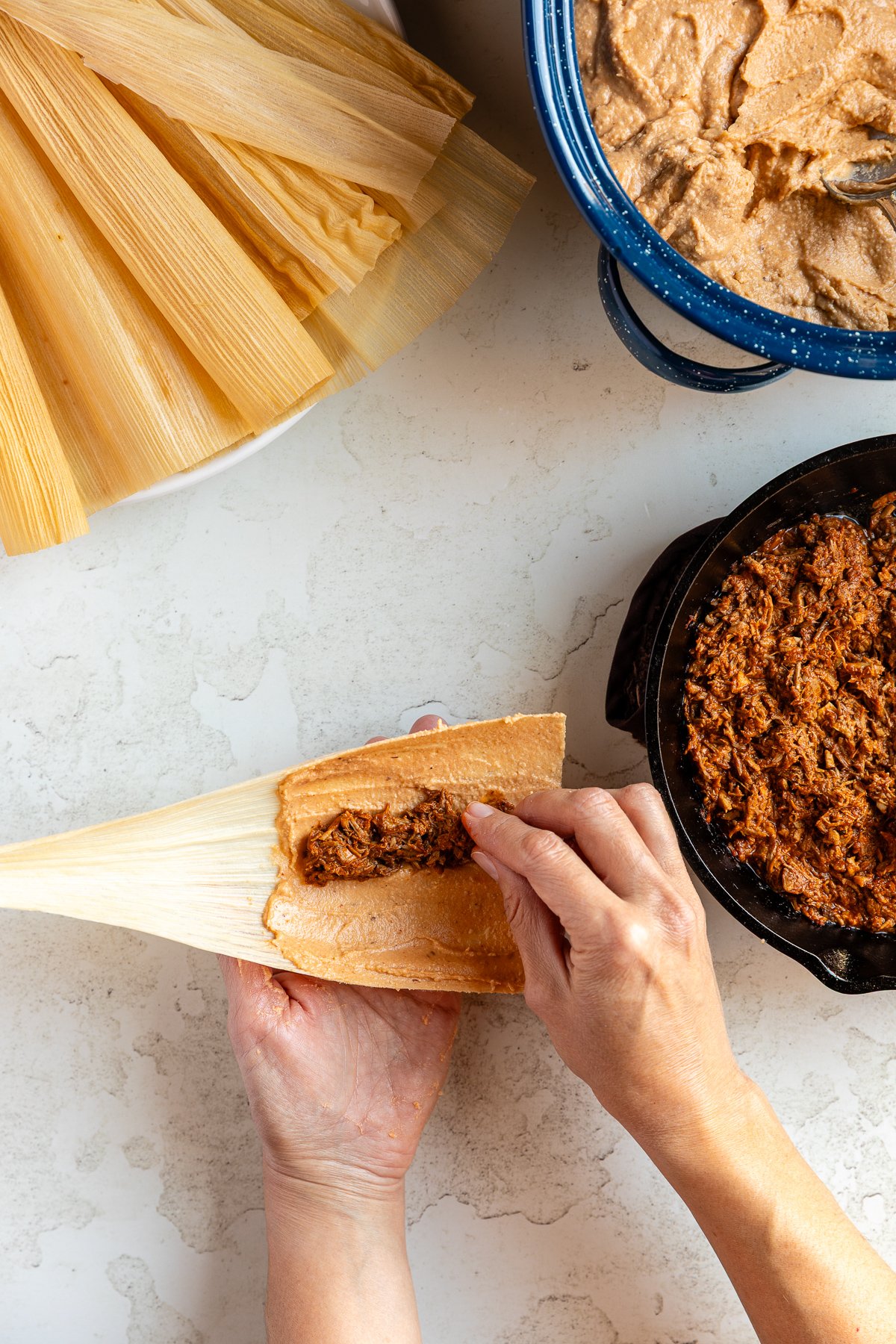
Adding the pork filling 
Folding the tamale
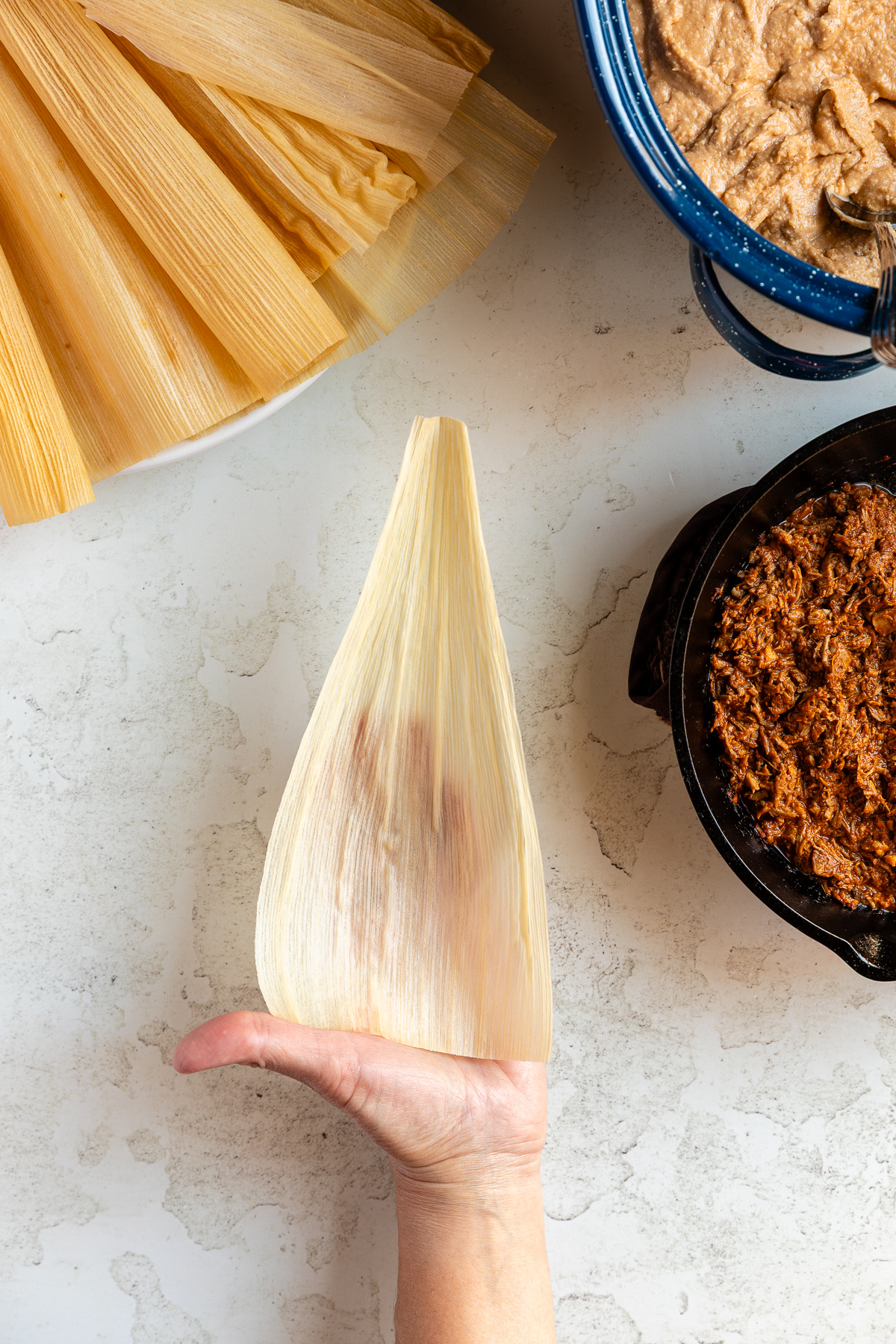

Start by removing a few husks from the water to drain into a bowl.
Tip: The corn husk should measure slightly wider than your hand. Feel free to tear larger husks in half.
Using a tablespoon or icing spatula, spread a thin layer of the masa onto the softened corn husk. If the masa won’t spread evenly, you may need to add more pork broth. It helps if the masa is still warm from adding the lard/fat.
After applying the masa, place about 1 teaspoon of pork filling in the center. Then gently fold over each side of the husk first and then the length of the husk to create an enclosed pocket.
Tip: Warm the meat slightly before filling the tamales if you make the meat on a separate day. If the meat dries out, you can add more pork broth.

If desired, you can wrap a small string of corn husk around the tamale to prevent the husk from opening while steaming. (We usually wrap bean tamales with a ribbon of husk to differentiate those from the pork tamales.)
4. Steaming the tamales
To cook the tamales, line a large pot with foil and place a coffee mug in the center upside-down. Then, arrange the tamales (open side up) around the mug, working from the center out.

Cover the tamales with foil, and pour boiling water (or the remaining pork broth) on top of the foil so the liquid drains to the bottom of the pot rather than inside the tamales.
Cook on medium heat for about an hour. After an hour, you can remove a tamale and let it cool before checking to see if the masa is fully set.
Let the tamales cool slightly before enjoying them, and ensure they are completely cooled before wrapping them for storage in a fridge or freezer.

And always remove the corn husks before eating tamales. President Ford once bit into a tamale, shuck and all, which later became known as the Great Tamale Incident!
You can enjoy your tamales with red salsa or pico de gallo and serve them with traditional Mexican rice and charro beans for the ultimate Tex-Mex experience.
How to store tamales
Before steaming the tamales, you can freeze a portion to cook later. Cooked or uncooked tamales should last in the fridge for 3-5 days or in the freezer for up to six months.
Below you’ll find the full recipe. The next time you have a craving for tamales, gather your familia to enjoy a tamale-making party!
More Entrees to Try

Authentic Mexican Tamales with Pork
Equipment
- blender or food processor
- large stock pot
- foil
Ingredients
- 1 package corn husks
Meat filling
- 7 pounds Boston butt pork roast (cut into large chunks)
- 3 packages Ancho chile peppers (4-ounce per package) (may substitute New Mexico chiles)
- 1 ounce cumin seeds (comino) (or ground cumin)
- 1 head garlic (peeled)
- 1 ounce whole black peppercorns
- 2 tablespoons lard or oil
- salt (to taste)
Masa
- 4 pounds Maseca for Tamales (or 10 pounds of pre-made masa)
- ¼ cup salt (to taste)
- 2 pounds pure lard (melted)
- 1 cup rendered beef fat (tallow) (or substitute additional lard, melted)
- 2 cups pork broth (reserved from meat filling)
Instructions
Corn Husks (Prepare Day Before)
- Clean and rinse the corn husks. Then, soak the husks in a large pot with very hot water overnight (or up to 2 hours).
- Rinse the husks again with water, and add fresh hot water to soak them in a pot while preparing the meat filling and masa.
Meat filling (pork)
- Remove stems and seeds from the chiles and rinse well.
- Place pork in a large stockpot and add just enough water to fully cover the meat. Bring to a boil, then reduce the heat to medium-low, and simmer until the pork is very tender (about 1 to 1.5 hours).
- After the meat is cooked, add half of the chiles directly to the pot with the pork and let them soak until softened (about 20-30 minutes). Note: New Mexico chiles may require more time to soften.
- Remove the chiles from the pot and peel off any large pieces of skin. Pulse the chiles in a blender or food processor, adding about 1 ½ cups of pork broth (from the pot) until the mixture forms a smooth puree.
- Separately, blend the peppercorns, cumin seed (or ground cumin), and peeled garlic, adding ¼ cup of water to form a paste. You can use a traditional molcajete or spice grinder for the cumin and peppercorns, or substitute ground spices.
- Remove the cooked pork from the pot, and chop it finely. Reserve the remaining broth to make the masa later.
- Add 1-2 tablespoons of lard or oil to a stock pot, and saute the chopped pork over medium heat, gradually adding the spices and blended chiles to taste. Season with additional salt to taste.
- Add pork broth as needed to make a moist, spoonable filling (“picadillo”).
Masa
- Place the remaining chiles in a separate pot and add enough water cover them. Bring the chiles to a boil, uncovered. Then, press them down into the water, cover the pot with a lid, and turn off the heat. Let the chiles soften 20–30 minutes in the covered pot.
- As before, remove any large pieces of peeling from the chiles before blending them in a blender or food processor.
- Prepare the lard and beef fat by melting them together in a pot and cooling until lukewarm. (Note: If beef fat is unavailable, you can substitute additional lard.)
- Prepare the masa by gradually adding very hot water until the dough sticks together and no powder is left. Add the salt, and mix well.
- Gradually work fats into the masa by hand until fully incorporated.
- Add the blended chile sauce a little at a time for color and flavor until fully incorporated.
- Add broth from the cooked pork until the masa is soft, spreadable, and fluffy.
Forming the Tamales
- Remove a few husks from the water, and place them in a bowl to drain slightly.
- Place a corn husk in the palm of your hand with the pointed end facing away. Split the husks if necessary to ensure the width is only slightly larger than your hand.
- Using the back of a tablespoon or icing spatula, place a small amount of masa in the center of the husk, and press the masa from the center to the edges. The masa should cover the husk from the palm of your hand to your fingertips, leaving the upper half of the husk uncovered.
- Place about 1 teaspoon of meat filling in the center of the masa.
- Fold over the left and right edges of the husk before folding the pointed end of the husk down. If desired, you can tear a piece of husk to tie around the tamale to keep it closed or designate a different filling.
Steaming the Tamales
- Line a large stock pot with foil, and place a coffee mug in the center (upside down).
- Arrange the tamales (open side up) around the mug. Then, cover with foil.
- Pour about 1 to 1 ½ cups of boiling water (or reserved pork broth) over the foil so it drains to the bottom of the pot. Cook on medium to medium-high heat for 50-60 minutes.


